

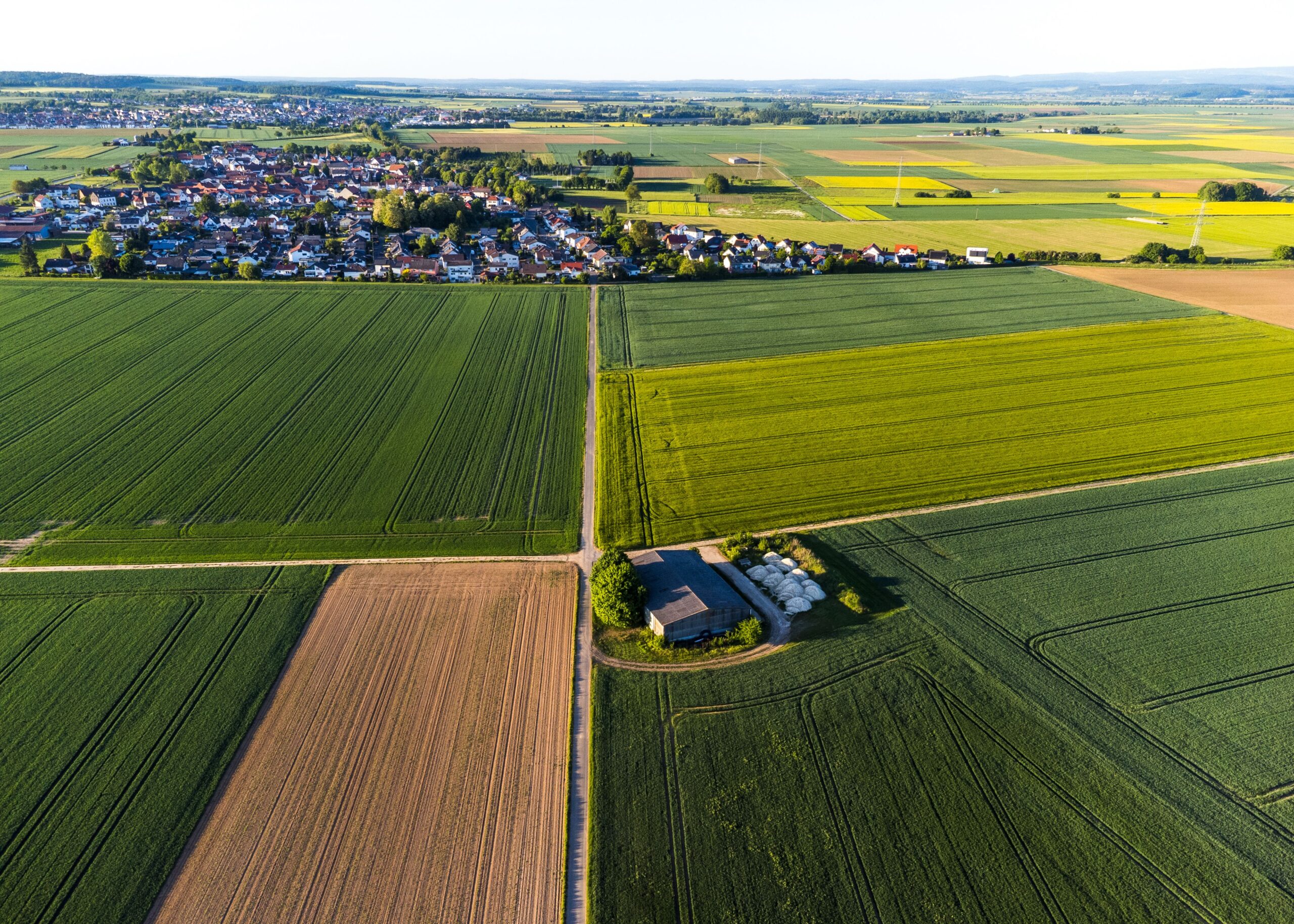
Picture a farmer in Brandenburg with 40 hectares near a substation.
In one quarter, three developers approach him. All three want roughly the same thing. All three are offering many multiples of what the land earns as arable, which is not a difficult sum to beat.
He signs with one of them – and it’s not always the one offering the most money. That’s the part the industry keeps getting wrong.
What actually decides it
He’s being asked to commit land for 30 years or more. Longer than he’ll farm it. Possibly longer than he’ll own it.
So what he’s weighing isn’t the annual figure. It’s whether the person in front of him understood the neighbours’ likely objection before he raised it. Whether they were honest that the project might not get consent. Whether they turned up in person or sent a letter with a QR code. Whether they’ll still be at that company in 18 months, or whether he’ll be handed to a new contact who has to be brought up to speed on his own land.
None of that is negotiation. It’s credibility, and it can’t be improvised in a meeting.
And the ground has moved underneath it
Planning rules for storage in outdoor areas have been rewritten repeatedly in under a year.
In November 2025 the Bundestag granted battery storage of 1 MWh and above a broad privilege under §35 BauGB, ending years of inconsistent treatment between federal states. Within weeks it was corrected. A second resolution in December split the privilege into separate categories for co-located and standalone projects, and the Bundesrat then flagged that significant questions of interpretation remained open, including how the 200 metre distance rules should actually be measured.
Then the bigger change. The cabinet approved the BauGB upgrade on 27 May 2026, now with the Bundestag and planned to take effect on 1 January 2027. Buried in a bill mostly about housing is a structural shift for anyone securing land: under the proposed §35(1a) and §5(5), municipalities can designate outdoor-area projects in the land use plan and give them privileging effect directly, without going through a full development plan.
Read that as a shift in who holds the pen. The municipality becomes a party to the decision rather than a body that processes it.
Which fuses two jobs into one
Land viability and grid proximity stopped being separate assessments some time ago. The transmission operators made that explicit when they published their connection criteria, where land securing and permitting status is one of four scored criteria. Now municipal intent sits in the same assessment too.
So the person doing this work needs three things at once. They need to read a land use plan and understand what it does and doesn’t permit. They need to know what capacity is realistically available at the nearest connection point, because a site with consent and no capacity is not a site. And they need a relationship with the municipality that predates the project.
Very few people have all three. The ones who do are usually not looking.
Why you can’t advertise for this
Post a role for a land acquisition manager in Germany and you’ll get applications. Most will have done one of the three things well.
The combination is what’s scarce, and it’s mostly invisible on a CV. Local networks don’t appear as a bullet point. Neither does the reason a municipality returns your calls. The people who are genuinely good at this tend to be found through the market rather than through a job board, and they move when someone they trust asks them to, not when they see an advert.
Which is the honest answer to why this profile is the most contested in German renewables right now, and why the developers securing the best sites are usually the ones who hired for it earliest.
If this is your job
You’re in demand, and probably more than your current employer has acknowledged.
We work with developers across German solar and battery storage, and land acquisition and project development are the roles we’re asked about most. If you want to know what’s actually out there, including the roles that aren’t advertised, that’s a conversation worth having whether or not you’re actively looking.
See our current clean energy roles.
And if you’re on the other side of this, trying to build an origination team fast enough to keep up with your pipeline, we should talk.


